
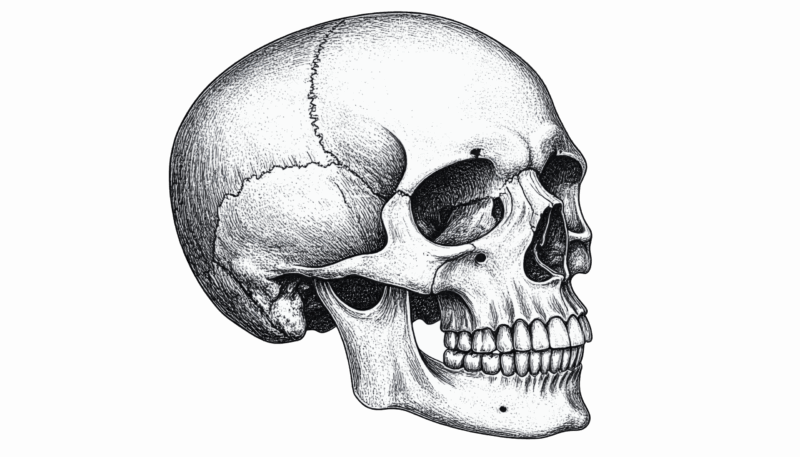

CRANIOLOGY
Craniology is the study of the relational anatomy of the bones of the skull and face. This study will support the tensegrity biomechanics of these bones. Then will be opened the mastery of the practical techno-methodology of the treatments of these bones of the cranium and the face, as well as the associated pathologies.
Award Winning
Established Team
Upcoming Courses
Program Overview
Cranio-sacral therapy has been around for a long time. Many mysteries are attached to it; and a strong mediocrity of answers, try to validate questions however clear, clear and precise.
Emmanuel Swedenborg (1688-1772), Swedish scientist, philosopher and theologian, whose writings were known late in life, wrote a book (The brain) in 1744, published later, in which he described precisely the human brain anatomy and its influence on the rest of the body.
In this book he states one of the fundamental principles of osteopathy, namely the primary respiratory mechanism.
– He talks about the intrinsic mobility of the brain and the spinal cord
– The fluctuation of the CSF
– The mobility of the intracranial membranes
– The articular mobility of all cranial bones
In addition to these four phenomena described by E. Swendenborg, two centuries later, W.G. Sutherland, an osteopath, described the osteopathic concept in the cranial field in his book “The Cranial Bowl” in 1939, and added the involuntary and intrinsic mobility of the sacrum.
Craniology 1
Dates
-
Prerequisite: none (*SomaTherapy program & ELDOA™ 4 completion highly recommended)
-
Generalities, history, and philosophy of the cranial treatment.
-
General biomechanics of the cranial and facial bones.
-
Relational anatomy of the Temporal. Craniometry.
-
Specific biomechanics of the Temporal axes.
-
Practical techno-methodology of Temporal normalizations.
Craniology 2
Dates
-
Prerequisite: Craniology 1
-
Tensegrity biomechanics of the cranial and facial bones
-
Biology of the Primary Respiratory Movement (PRM).
-
Relational anatomy of the Occipital and Sphenoid.
-
Specific biomechanics of the Occipital and Sphenoid and the SSB.
-
Practical techno-methodology of the normalizations of the Occipital and Sphenoid and SSB.
Craniology 3
Dates
-
Prerequisite: Craniology 2
-
Cranial rhythm.
-
Relational anatomy of the Ethmoid, Parietal and Frontal.
-
Specific biomechanics of the Ethmoid, Parietal and Frontal.
-
Practical techno-methodology of the Ethmoid, Parietal and Frontal normalizations.
Craniology 4
Dates
-
Prerequisite: Craniology 3
-
Embryology of the Branchial Arches.
-
Relational anatomy of the facial bones and fascia of the face.
-
Tensegrity biomechanics of the facial bones and fascia of the face.
-
Practical techno-methodology of the facial bones and fascia of the face normalization.
Craniology 5
Dates
-
Prerequisite: Craniology 4
-
Physiology of the Cerebral Spinal Fluid.
-
Functional anatomy of the different parts of the cranial and spinal dura mater.
-
Practical techno-methodology of the normalizations of the dura mater.
-
Practical techno-methodology of central nervous system (CNS) ventricles normalizations.
-
Practical techno-methodology of normalizations of venous sinuses and cranial glymphatic circulation.
Craniology 6
Dates
-
Prerequisite: Craniology 5
-
Descriptive and functional anatomy of the first 6 cranial nerves (I, II, III, IV, V, VI).
-
Physiology of the first 6 cranial nerves.
-
Pathologies and diagnostic tests of the first 6 cranial nerves.
-
Practical techno-methodology of the normalizations of the first 6 cranial nerves.
Craniology 7
Dates
-
Prerequisite: Craniology 6
-
Descriptive and functional anatomy of the last 6 cranialnerves (VII, VIII, IX, X, XI, XII)
-
Physiology of the last 6 cranial nerves.
-
Pathologies and diagnostic tests of the last 6 cranial nerves.
-
Practical techno-methodology of the normalizations of the last 6 cranial nerves.
Craniology 8
Dates
-
Prerequisite: Craniology 7
-
Functional anatomy of the central nervous system.
-
Clinical physiology of the main syndromes of the central nervous system.
-
Pathologies and diagnostic tests of the main syndromes of the central nervous system.
-
Practical techno-methodology of central nervous system normalizations.
Craniology 9
Dates
-
Prerequisite: Craniology 8
-
Review of the functional anatomy and physiology of the central nervous system
-
Physiopathology and diagnosis tests of the central nervous system; Alzheimer’s disease, Bell’s palsy, Cerebral palsy, Epilepsy, Motor neurone disease (MND), Multiple Sclerosis (MS), Neurofibramatosis, Parkinson’s disease, etc.
-
Practical therapeutic techno-methodology of these pathologies
-
Graduation ceremony